Bread Without Additives – Our Technical and Philosophical Choice
Introduction – Process Matters More Than Permission
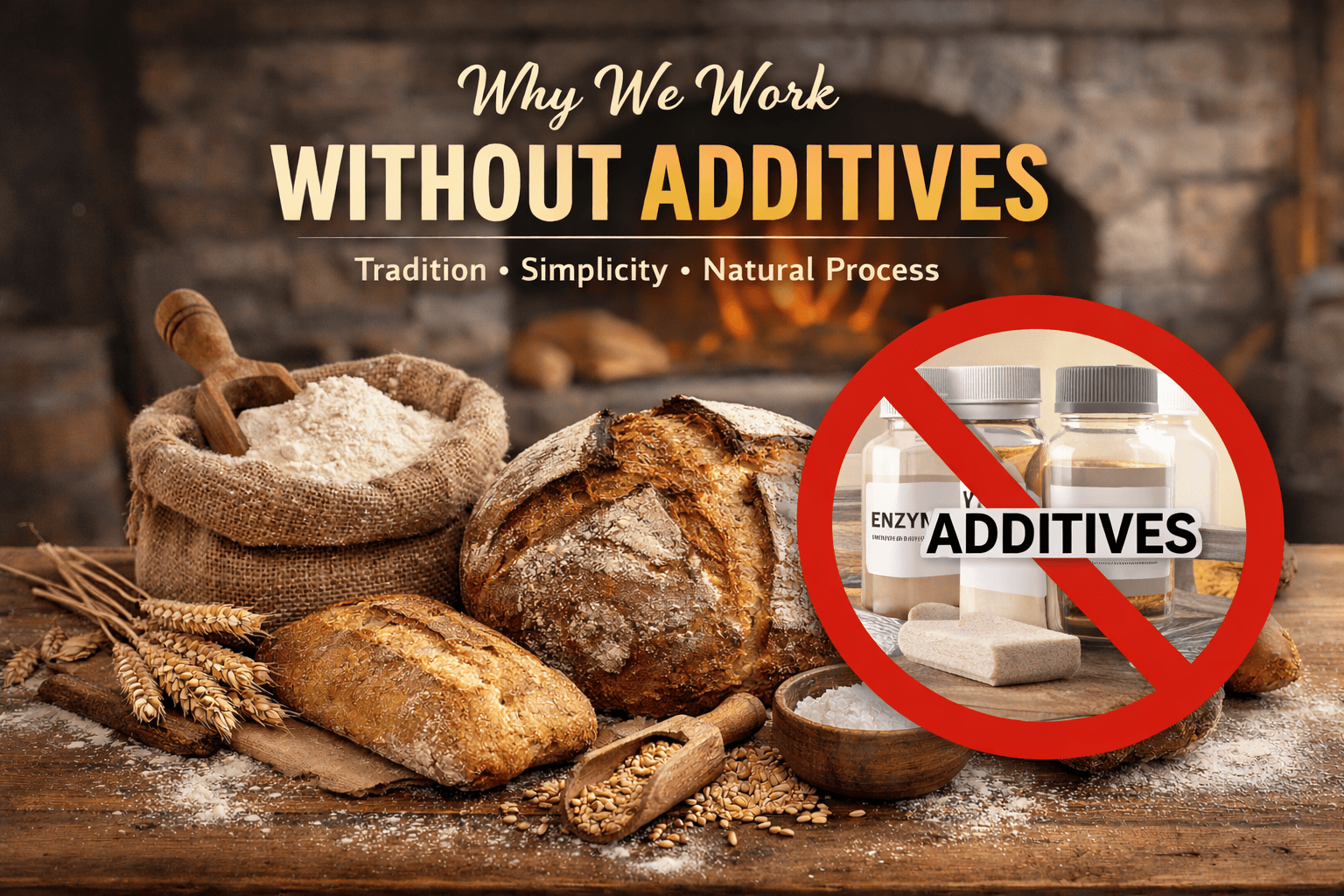
Bread without additives defines our approach at Le Petit Paris® in Florida. Although U.S. regulations allow emulsifiers, preservatives, dough conditioners, and added enzymes, we deliberately choose a different path. Instead of relying on technological correction, we rely on time, fermentation, and technical discipline.
This decision is not regulatory opposition. Rather, it reflects a technical and philosophical position: when biological processes can achieve structure, flavor, and stability, we prefer process over intervention.
U.S. Regulations Allow Additives – But Do Not Require Them
In the United States, the FDA permits a wide range of additives in bread production. For example, manufacturers may use:
-
Emulsifiers (such as DATEM, mono- and diglycerides, or others)
-
Dough conditioners (such as L-cysteine or others)
-
Preservatives (such as calcium propionate or others)
-
Added enzymes (such as exogenous amylases or others)
These substances are considered safe under defined conditions of use.
However, legal authorization does not mean technical necessity. Therefore, we choose bread without additives because fermentation can fulfill these structural functions naturally.
The Core Issue – Replacing Time with Technology
Bread is not simply mixed; it is developed.
When producers shorten fermentation, they often compensate with technological aids. Emulsifiers stabilize crumb structure. Oxidizing agents accelerate gluten development. Preservatives extend shelf life.
Nevertheless, these tools substitute time with intervention.
By contrast, bread without additives develops gradually. Gluten organizes progressively. Organic acids form naturally. Internal structure stabilizes through biological activity rather than artificial reinforcement.
As a result, process becomes the primary driver of quality.
Long Fermentation as the Structural Engine
Long fermentation sits at the center of bread without additives.
During this extended process:
-
Natural enzymes activate progressively
-
Starch structure begins to transform
-
Protein networks reorganize
-
Organic acids modify the internal matrix
Because fermentation unfolds slowly, the dough evolves biologically. Consequently, we achieve structure without relying on chemical correction.
Moreover, acidity generated during fermentation influences both texture and metabolic behavior.
Digestibility and Functional Effects
Bread without additives does not claim medical benefits. However, process clearly affects physiology.
First, long fermentation modifies certain starch fractions. Therefore, the metabolic response may differ compared to rapidly produced bread.
Second, acidic fermentation activates phytase enzymes naturally present in flour. As a result, phytate bonds partially reduce, potentially improving mineral availability.
Third, extended enzymatic activity reduces the digestive workload required from the body. Although we avoid therapeutic claims, biological transformation influences how the bread behaves during digestion.
In short, fermentation changes structure before consumption even begins.
Regulatory Safety and Rational Prudence
We do not claim that approved additives are toxic. Regulatory agencies evaluate them individually within defined limits.
However, modern diets often include multiple processed foods daily. Therefore, cumulative exposure becomes relevant. Instead of increasing formulation complexity, we reduce it.
Bread without additives simplifies the ingredient list. Furthermore, it limits reliance on non-essential technological agents. Most importantly, it maintains process transparency.
This position reflects prudence, not alarmism.
The Technical Discipline Behind Bread Without Additives
Producing bread without additives requires precision.
Because we do not use preservatives, freshness windows remain shorter. Therefore, we manage rotation carefully and bake frequently.
Because we do not use stabilizers, fermentation demands constant monitoring. Temperature, hydration, and humidity require daily adjustments.
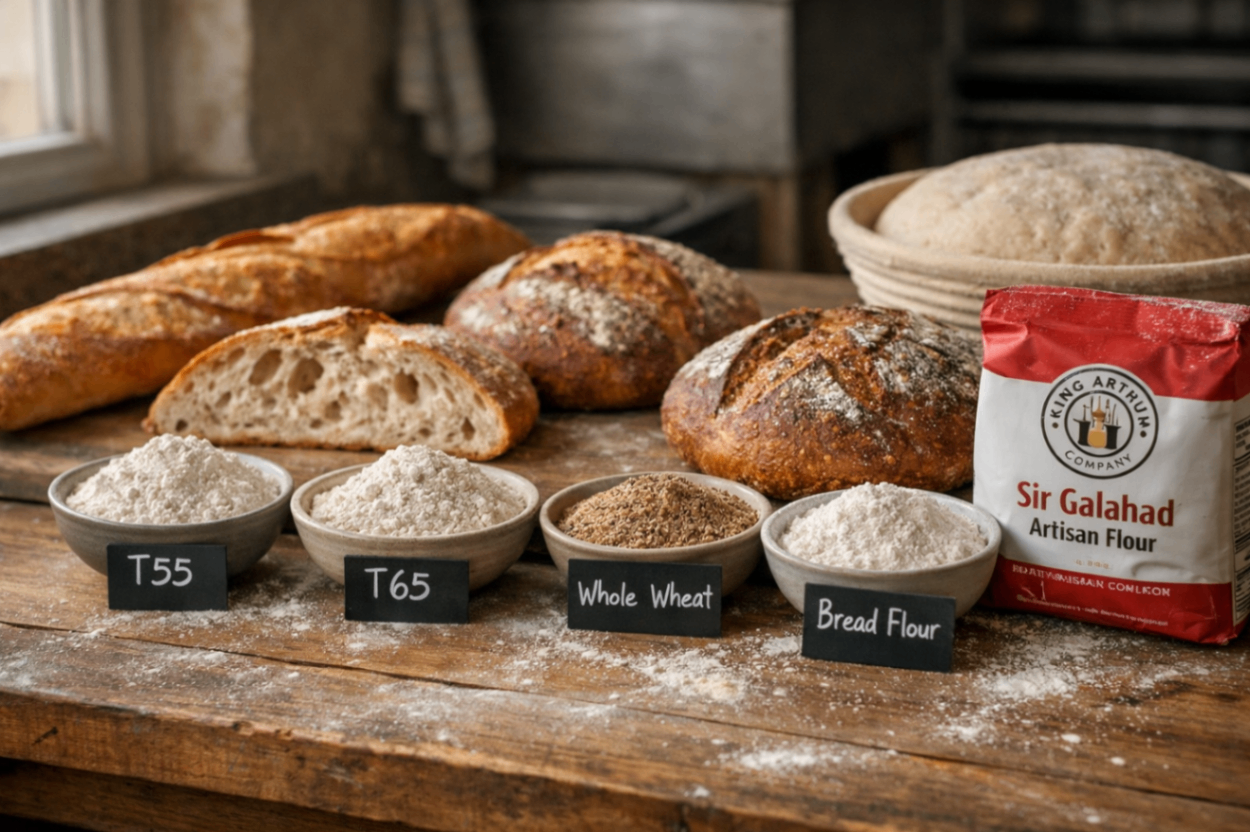
In addition, flour variability must be managed through technique rather than correction.
Consequently, this approach increases responsibility. Yet it reinforces professional mastery.
A Philosophical Commitment to Simplicity
Beyond technique, bread without additives expresses restraint.
In a food environment where complexity dominates, we prioritize clarity. Instead of multiplying corrective agents, we refine process control. Instead of extending shelf life artificially, we adjust production rhythm.
Thus, bread without additives reflects coherence between technical knowledge and professional responsibility.
What Bread Without Additives Means in Practice
Bread without additives means:
-
No emulsifiers (such as DATEM or others)
-
No dough conditioners (such as L-cysteine or others)
-
No added preservatives (such as calcium propionate or others)
-
No artificial enzymatic acceleration
Instead, we use only:
-
Flour
-
Water
-
Salt
-
Yeast or sourdough
Nothing more.
Conclusion – Biological Development Over Technological Assistance
Bread without additives represents both a technical and philosophical choice.
While U.S. regulations permit numerous additives, we deliberately prioritize long fermentation and biological development. Because time can create structure, flavor, and stability, we do not depend on artificial reinforcement.
Bread can be technologically assisted.
Or it can be biologically developed.
We choose bread without additives.

Leave A Comment