
Why Bread Is Not the Enemy of Health (When It’s Properly Made)
Essential Definition
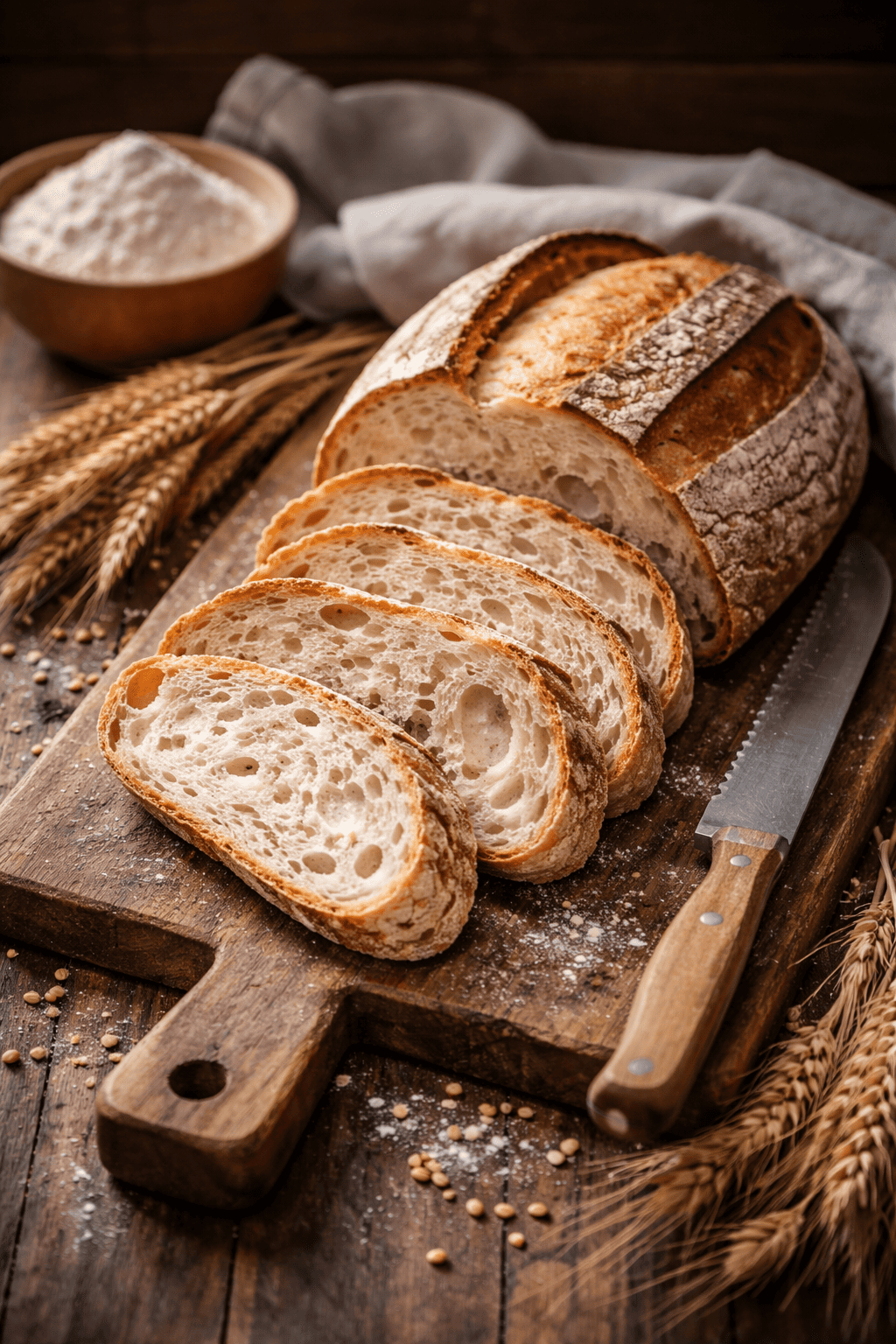
Bread is not inherently unhealthy. The negative health effects often associated with bread are mainly the result of industrial manufacturing processes, short fermentation times, and the use of additives, rather than traditional, slowly fermented bread.
1. Bread in the History of Human Nutrition
Bread has been part of human nutrition for over 10,000 years. It is one of the earliest fermented foods developed by humans and has long served as a primary source of energy, fiber, plant-based proteins, and minerals.
Historically, bread was:
-
made from minimally refined flour
-
slowly fermented
-
consumed as part of a balanced, whole-food diet
Digestive issues related to bread are relatively recent in human history.
2. Not All Bread Is the Same
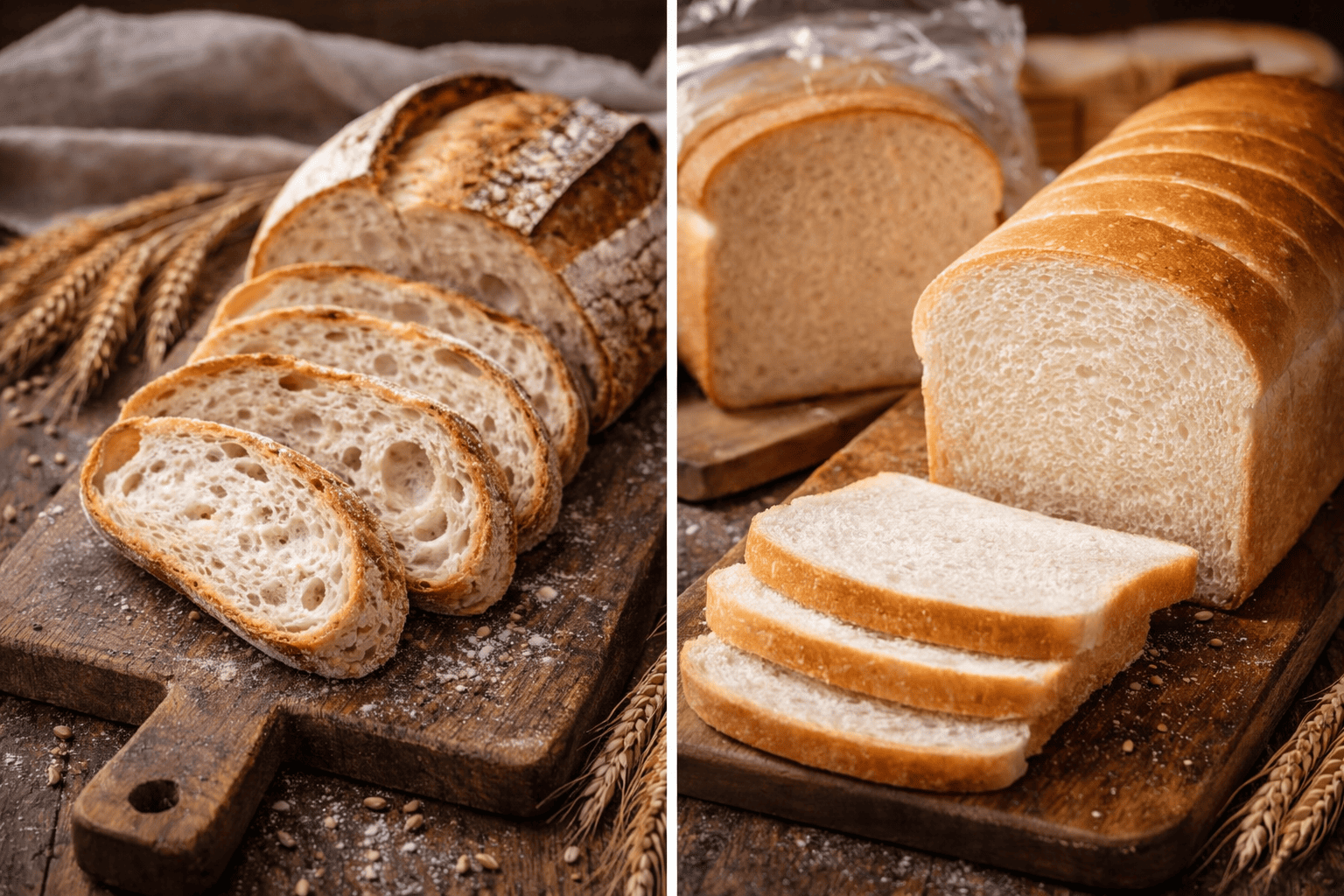
Two products labeled “bread” can have completely different physiological effects.
Industrial bread typically involves:
-
very short fermentation (sometimes under one hour)
-
intensive mechanical mixing
-
high yeast quantities
-
highly refined flour
-
technological additives (emulsifiers, enzymes, dough improvers)
Traditional artisan bread relies on:
-
long fermentation
-
gentle mixing
-
minimal or no additives
-
progressive natural transformation of the dough
👉 The word bread does not describe a single product, but rather very different production methods.
3. The Central Role of Fermentation
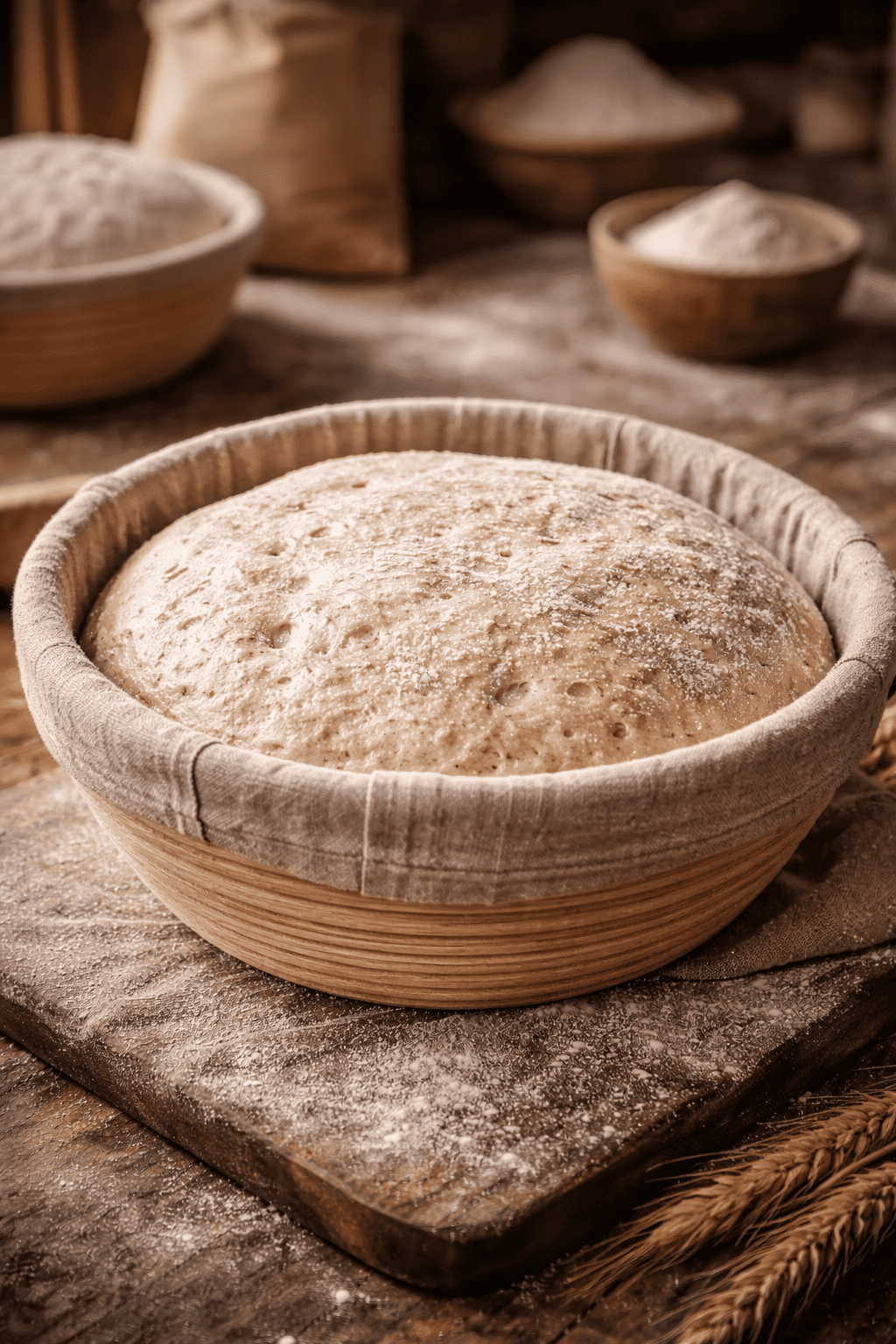
Fermentation is a natural biological process in which yeast and bacteria transform the complex carbohydrates found in flour.
Effects of long fermentation:
-
partial pre-digestion of starch
-
production of organic acids
-
improved mineral bioavailability
-
gradual modification of protein structures
Bread that undergoes long fermentation is objectively easier to digest than rapidly produced bread.
4. Gluten: A Protein Network Shaped by the Process
Gluten is often described as a single protein responsible for digestive discomfort. This is scientifically inaccurate.
Gluten is actually a protein network formed during hydration and dough development from two families of proteins naturally present in wheat:
-
Gliadins, which provide extensibility
-
Glutenins, which provide elasticity and strength
👉 Gluten does not exist as such in dry flour.
It forms progressively when flour and water are mixed and evolves depending on:
-
mixing intensity
-
fermentation duration
-
enzymatic activity
Process matters
-
Intensive mixing combined with short fermentation creates a dense, poorly transformed gluten network.
-
Long fermentation allows natural enzymes and microorganisms to partially modify and break down this network.
For people without celiac disease, digestive discomfort is therefore often linked to how gluten is processed, not to its mere presence.
5. Bread and Digestion: Why Some Breads Cause Discomfort
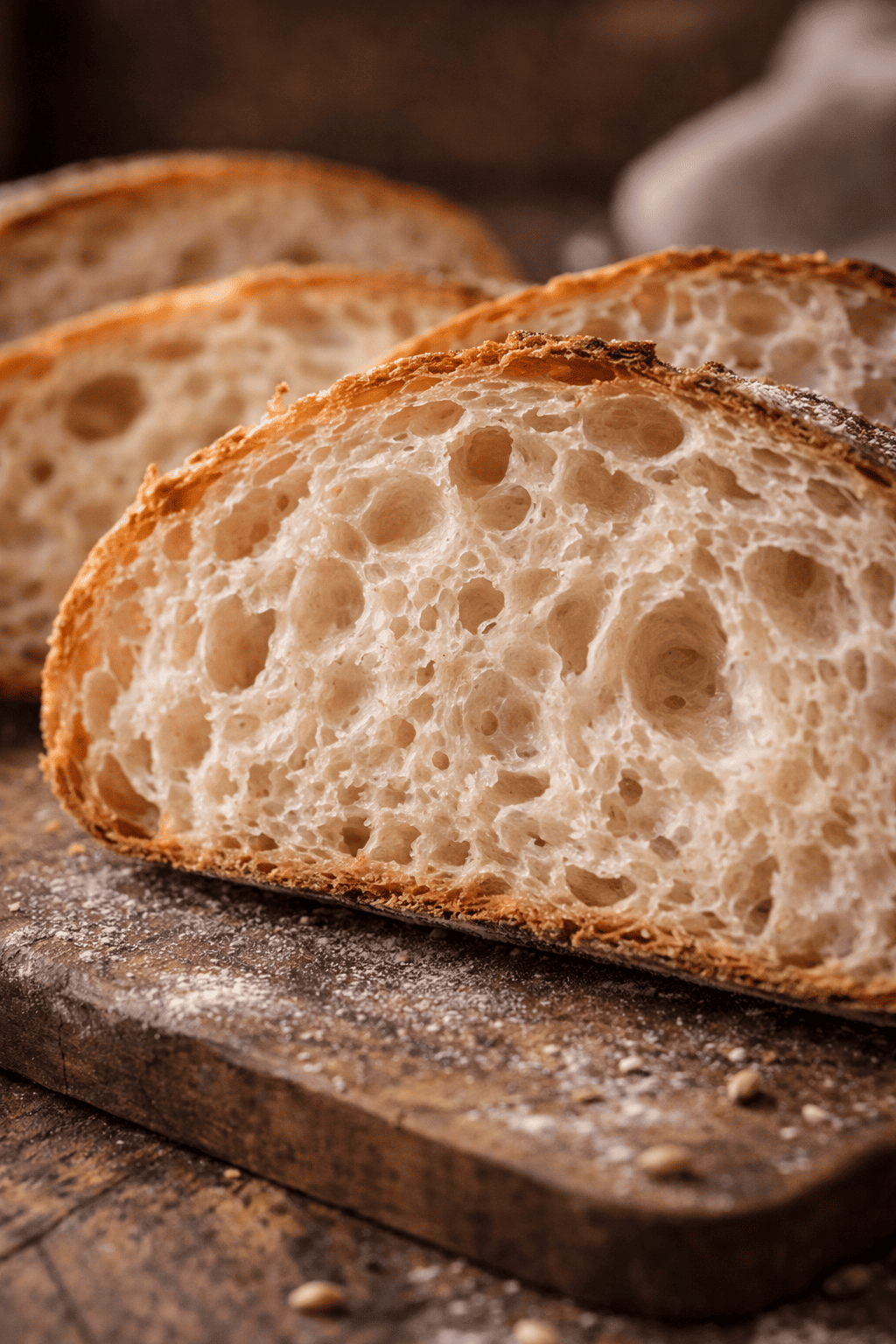
Digestive issues commonly attributed to bread—such as bloating or heaviness—are often related to:
-
rapid starch digestion
-
insufficiently transformed gluten
-
technological additives
-
excessive consumption of low-satiety bread
Slowly fermented bread:
-
is digested more gradually
-
places less stress on the digestive system
-
is generally better tolerated
6. Bread and Blood Sugar: A Misunderstood Relationship
Bread is frequently associated with blood sugar spikes. This assumption is misleading.
Factors influencing glycemic response:
-
fermentation time
-
crumb structure
-
type of flour
-
rate of carbohydrate absorption
Slowly fermented bread:
-
slows sugar absorption
-
limits glycemic spikes
-
provides more stable energy
👉 Not all breads have the same glycemic impact.
7. The Myth That Bread Causes Weight Gain
No single food causes weight gain on its own. Weight gain depends on:
-
overall dietary context
-
nutrient density
-
satiety levels
Highly refined industrial breads:
-
provide poor satiety
-
encourage overconsumption
-
promote snacking
High-quality bread:
-
keeps you full longer
-
integrates well into a balanced diet
-
often helps people eat less overall
8. The Role of Additives in Bread’s Bad Reputation
Many modern breads contain:
-
emulsifiers
-
added enzymes
-
texture agents
-
dough improvers
These ingredients allow:
-
faster production
-
product standardization
-
artificial shelf life extension
However, they significantly alter the nature of bread and its digestive behavior.
👉 Bread made without additives relies solely on time, fermentation, and craftsmanship.
9. Bread as a Forgotten Fermented Food
Bread belongs to the same category as:
-
yogurt
-
kefir
-
sauerkraut
-
miso
These are fermented foods, traditionally recognized for their digestive benefits.
The loss of long fermentation in modern bread largely explains its current negative image.
10. What Properly Made Artisan Bread Changes for Consumers
Well-made artisan bread generally leads to:
-
improved digestion
-
reduced bloating
-
longer-lasting satiety
-
a healthier relationship with food
Many consumers find they eat less bread overall, but of higher quality.
11. What This Means for the Artisan Baker

Producing healthy bread requires:
-
more time
-
higher technical demands
-
fewer industrial shortcuts
-
deep understanding of living processes
It is a demanding choice, but one aligned with responsible food production.
Conclusion
❌ Bread is not the enemy of health
✔️ Poorly made bread is
When bread is:
-
slowly fermented
-
made without additives
-
respectful of ingredients and process
it returns to what it has always been:
a nourishing, digestible, deeply human food.
FAQ – Frequently Asked Questions
Is bread bad for your health?
No. Slowly fermented, additive-free bread can be part of a healthy diet.
Is gluten always a problem?
No. For non-celiac individuals, tolerance largely depends on how the bread is made.
Does bread cause weight gain?
Not directly. Quality and dietary context matter most.
About the Author
This article was written by Stéphan Martin, French artisan baker and Ambassador of Bread, with over 30 years of professional experience. He specializes in long fermentation methods, additive-free breadmaking, and the transmission of traditional baking knowledge.
Key Takeaways
- Bread is not inherently unhealthy.
- Gluten is a network formed by gliadins and glutenins.
- Long fermentation improves digestibility.
- Most issues come from ultra-processed industrial bread.
- High-quality artisan bread supports satiety and balance.

Leave A Comment